
What is microfinance in India? A plain guide for families
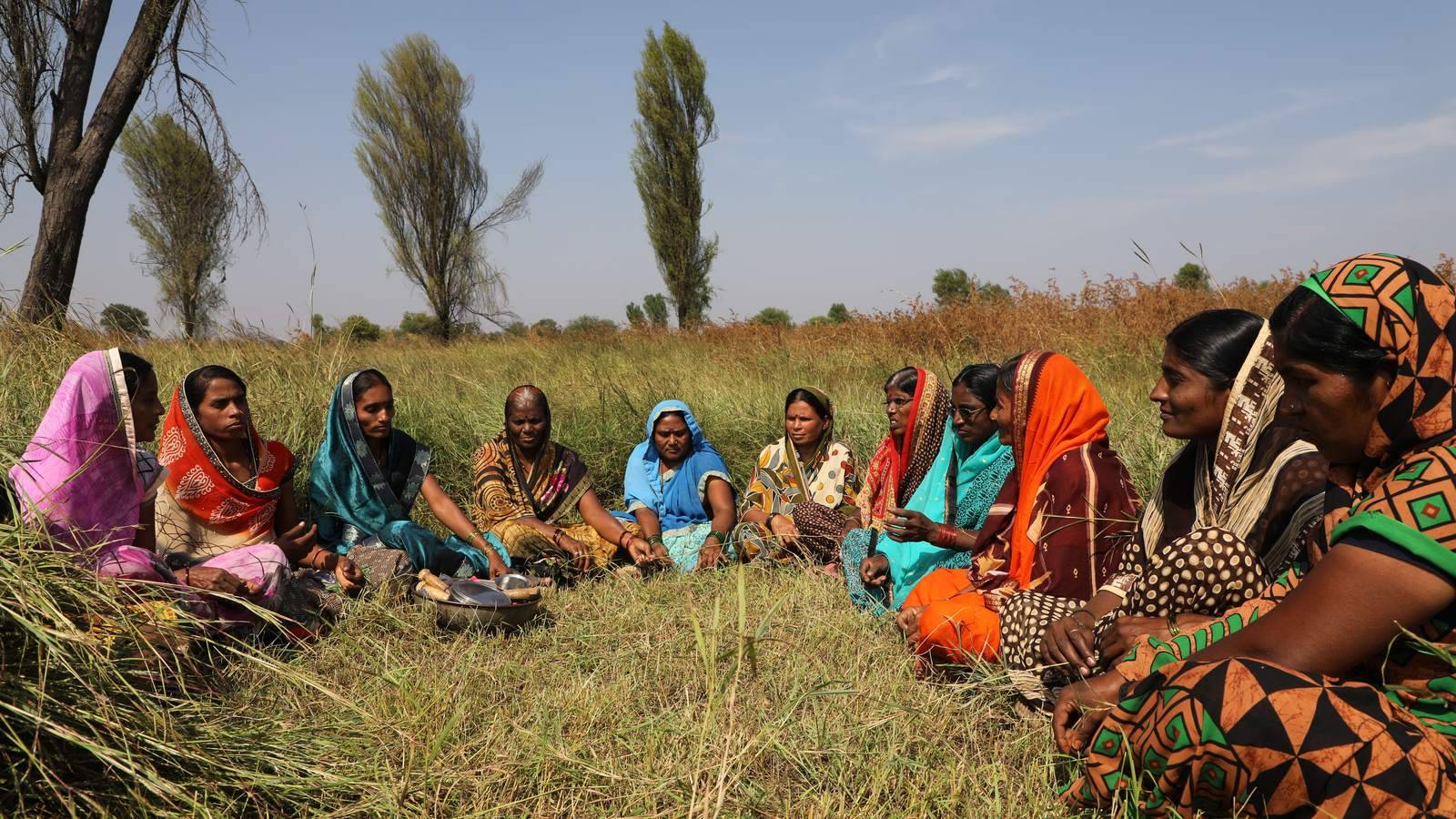
Short answer: Under RBI rules, a microfinance loan is any loan without collateral (nothing like gold or land is pledged as security) given to a household with yearly income up to ₹3,00,000. It does not matter who gives it: a bank, small finance bank or NBFC. You usually repay weekly or monthly, and the loan often comes through a group. RBI also caps a household’s total loan repayments, including other loans, at 50% of its monthly income. That figure is the upper limit the rules allow. It is not a safe amount to spend on debt.
The situation
Sunita runs a small tailoring business from home in a village near Patna. Her husband does daily-wage work. A loan officer visits the women’s group in their lane and offers each member ₹40,000, repaid fortnightly (every two weeks). Sunita wants a second sewing machine. Her neighbour already has two such loans.
So before saying yes, the family needs some answers. Who is lending? Who has to repay, how often, and how much in total? And what happens if one member can’t pay?
Key words to know
- Lender: the bank or NBFC that actually gives the money. An NBFC (non-bank finance company) is a company registered with RBI that lends but is not a bank. An NBFC-MFI is an NBFC that works mainly in microfinance, but banks and other NBFCs give these loans too.
- Household: RBI counts the income of the household (husband, wife and their unmarried children), not just the person who borrows.
- JLG (joint liability group): a small group where members may have to pay for each other if someone misses a payment. It depends on the contract.
- SHG (self-help group): a group, often of women, that saves money together and may take a bank loan as a group.
What RBI rules say
- Income limit: the loan counts as microfinance if household income is up to ₹3 lakh a year.
- No collateral: the lender must not ask for property or valuables as security.
- Repayment cap: a household’s monthly payments on all loans, microfinance and others, should not go above 50% of monthly household income. The lender must check household income before lending.
- Pricing: the lender must have a board-approved pricing policy, show its lowest, highest and average interest rates in its offices and on its website, and show the full cost in a Key Facts Statement (KFS), a short sheet with the rate, fees and total you repay.
- Fair conduct: RBI does not accept calls to late borrowers before 9 am or after 6 pm, or other harsh behaviour.
- Prepayment: you can repay early with no penalty.
The industry also has its own rules (MFIN guardrails, since April 2025). They limit a borrower to 3 microfinance lenders and ₹2 lakh of total microfinance debt. These come from the industry, not from RBI, and not every lender follows them.
The 50% cap is a limit, not advice
Take a household earning ₹20,000 a month. The rules would allow up to ₹10,000 in loan repayments. That leaves only ₹10,000 for food, rent, school, medicines and everything else. Most families are safer paying a much smaller share, and even more so if income changes with the seasons.
Weekly, fortnightly, monthly: compare carefully
Say a loan of ₹40,000 is repaid as ₹1,000 a week. It sounds small. But some months have five weeks, so you pay ₹4,000–5,000 a month. Over 52 weeks you pay ₹52,000 in total. That means the loan costs you ₹12,000, before any fees or insurance.
Illustrative example only (a made-up case to show the idea). Always check the actual schedule and the APR in the KFS. The APR (annual percentage rate) is the full yearly cost of the loan, with interest and fees together.
Ask for the total amount you will repay. Then compare it with the cash you actually get in hand after deductions (money the lender keeps back for fees or insurance).
Questions to ask before you agree
- What’s the lender’s legal name, and is it registered with RBI?
- Is this a group loan? Do I have to pay if another member doesn’t?
- How much will I get in hand, after fees and insurance?
- How much is each payment, how often, and how many payments are there?
- What’s the APR, and the total amount I’ll repay?
- Do I have to buy any insurance or product with the loan?
- What happens if I miss a payment?
- Who do I complain to? Ask for the contact of the grievance officer (the person at the lender who handles complaints).
Signs to slow down
- The household already pays several loans, or the new loan will pay off an old one.
- The loan officer says “everyone is taking it” or “the offer ends today”.
- Someone asks you to sign blank forms, or the KFS isn’t in a language you understand.
- The repayments depend on money you are not sure of, like the next harvest or a job you hope to get.
What to check today
- List every loan the household has, with the weekly or monthly payment for each. Include group loans, gold loans and money owed to shops or relatives.
- Add up the payments. Compare the total with the income you can count on in a weak month.
- Check the lender on the RBI list (see How to check a lender or loan app).
Try it with your own numbers
→ Can I afford it? (household mode): enter household income, all family loan payments and basic costs. Weekly payments are shown as weekly, with a monthly figure next to them.
Sources and review
- RBI — FAQs on the Regulatory Framework for Microfinance Loans (updated 30 Jan 2025), Q3–Q5, Q10: https://www.rbi.org.in/commonman/Upload/English/FAQs/PDFs/RFML30012025.pdf
- RBI — Review of qualifying asset criteria for NBFC-MFIs (6 Jun 2025): https://www.rbi.org.in/Scripts/NotificationUser.aspx?Id=12856
- MFIN guardrails (industry self-regulation, effective 1 Apr 2025): editor to add a primary MFIN link
- Examples by Paisavy.
Educational information, not financial advice. Found an error? Tell us → · Corrections log